

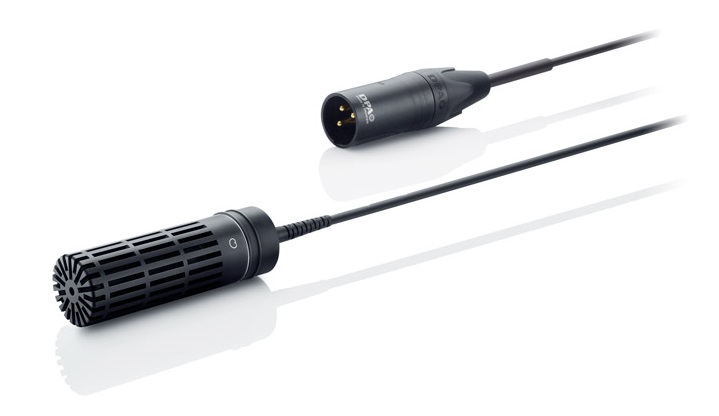
The compact 2011C Twin Diaphragm Cardioid Microphone from DPA features a modular capsule design and sonic character. It contains a cardioid condenser capsule suitable for capturing instruments in sound reinforcement applications. The capsule's twin diaphragm is designed to provide a fast impulse response and large frequency bandwidth, resulting in low inherent noise. Additionally, the microphone maintains a linear tonal response when closely positioned near speaker cabinets, percussion, and other instruments. Its modular design allows users to manually switch optional capsules, providing versatility and performance. The 2011C's output stage offers the MMP-C preamplifier for faithful recreations of the original source material. The package includes a microphone clip and windscreen.
Main Benefits
- Blends clarity, richness and dynamics
- Twin Diaphragm Capsule Technology
- Advanced Interference Tube Technology
- Superb stage separation and level control
- Modular flexibility
- Compact Design
- Cardioid Polar Pattern
- Well Suited for Live Sound Reinforcement
- Transparent Output Stage
Description
The d:dicate™ 2011 Twin Diaphragm Cardioid Mic is a directional microphone. The distinctive sound of this microphone is well balanced. It bridges the gap between the extreme sound quality of the d:dicate™ Recording Microphone Series and the well-known d:screet™ Miniature Microphone Series.
Combine it with the preamp of your choice
As with all of the modular d:dicate™ microphones, you can combine the d:dicate™ 2011 Twin Diaphragm Cardioid Mic Capsule with any of our preamps.The MMP-A Mic Preamp is an ultra-transparent, transformerless preamplifier with active drive for impedance balancing. The MMP-C Compact Mic Preamp is an ultra-compact preamplifier with active drive for impedance balancing. It has a slightly softer character than the other preamps in the d:dicate™ Microphones Series.

Other preamps include the very small form factor types MMP-E Modular Active Cable (XLR output) and MMP-G Modular Active Cable (MicroDot output), allowing for very slim set-ups. The MMP-G even allows you to match a larger microphone directly to a wireless transmitter.
The d:dicate™ 2011A Twin Diaphragm Cardioid Mic is acclaimed for its close-miking excellence and hi-SPL handling. Optimized for onstage use, it has been used on many stages as well as recording sessions. It exhibits a previously unheard blend of clarity, richness and dynamic range.

The d:dicate™ 2011C Compact Twin Diaphragm Cardioid Mic offers a subtle character alteration with a bit more “body” to the low end than the d:dicate™ 2011A. It is also much easier to position than other cardioid mics.
At any time, and with no tools needed, it is possible to transform the d:dicate™ 2011 Twin Diaphragm Cardioid Mic into a new configuration. The d:dicate™ 2011 is very widely used as a snare drum mic but fits easily well on many other instruments.
A bit about cardioids
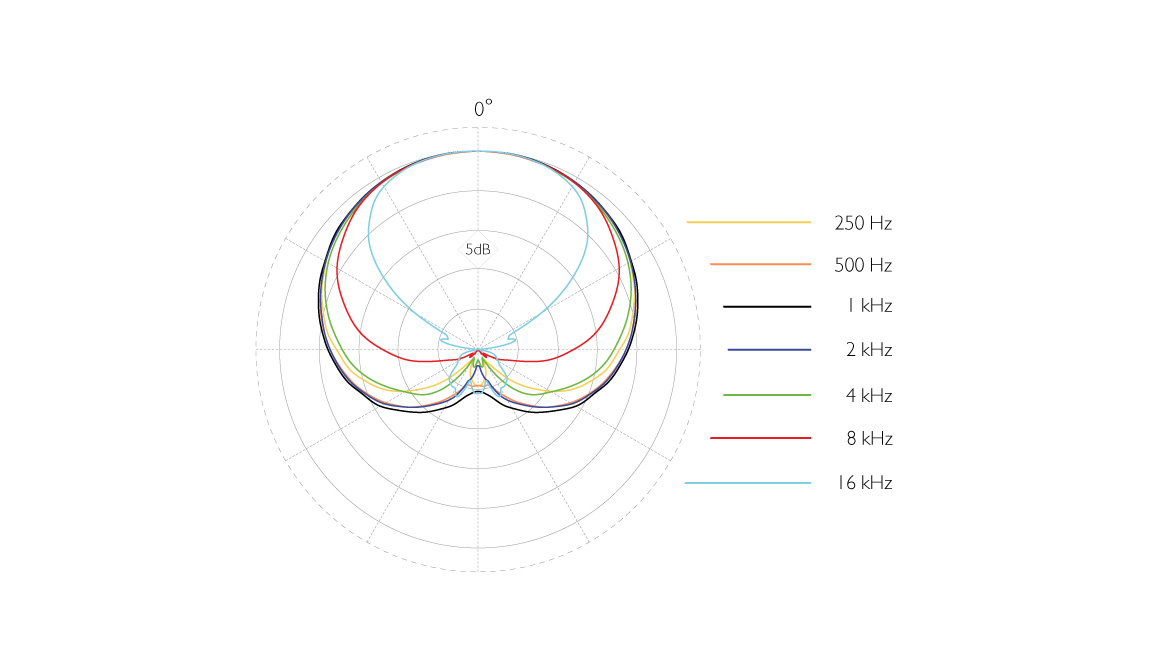
Named for its “heart shaped” polar pattern, a cardioid (or directional) microphone has the most sensitivity at the front and is least sensitive from the sides and at the back. They come in many variations – with wider or narrower angles of sensitivity (supercardioid, hypercardioid, wide cardioid etc.). Although cardioids also pick up sound coming in from the sides, this off-axis sound will normally be more or less colored and damped. The unique DPA capsule technique however skips the colorization of the sound coming from the sides or the rear of the mic and just reduces the sensitivity to these angles and thereby offers perfect sound stages. The amount of damping depends on the exact specifications of the mic.
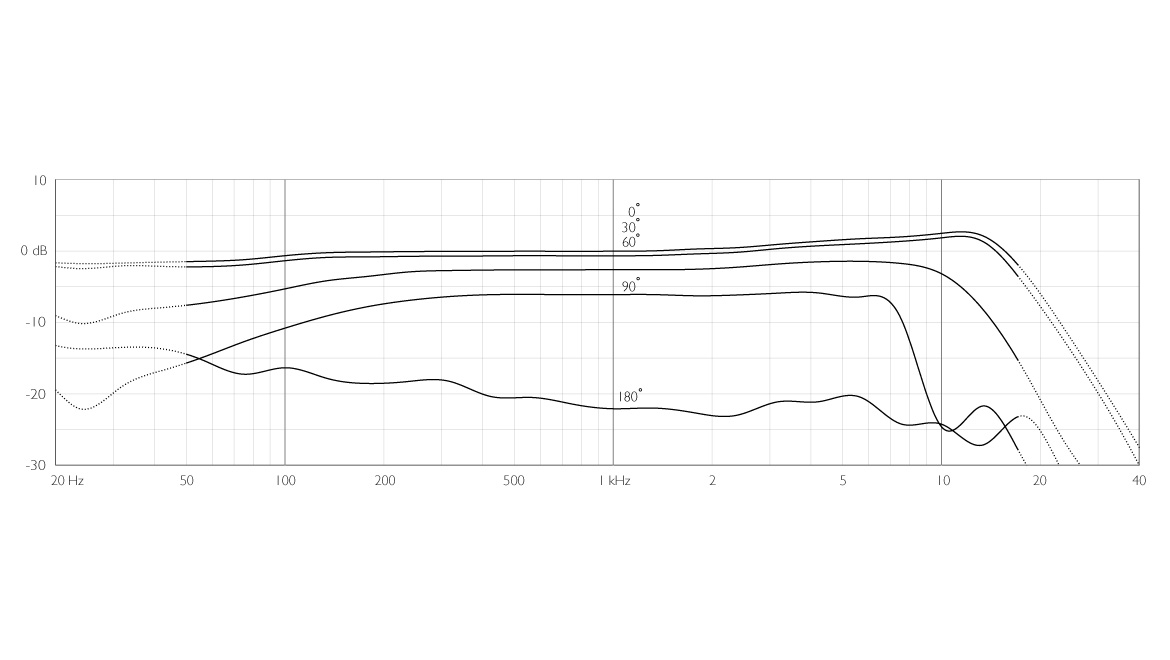
A cardioid microphone is, by definition, damped -6 dB at the 90°side entry of the microphone but for many, the word cardioid generally covers mics with a directional pattern versus omnis, which pick up sound from all directions.
Due to their nature, directional mics are often used on the live stage – both during concerts as well as spoken-word events, to capture the focused sound of an instrument or voice. The narrow angle of sensitivity helps to minimize the bleed from other sounds on a busy stage. One thing to note with cardioid mics is the proximity effect, which causes an increase in bass response the closer the microphone is moved to the sound source. Therefore, when judging mic specs you should always look for a statement stating the distance at which the flat frequency response has been measured. In addition, cardioid mics are far more sensitive to wind, pop and handling noises than omni mics, so be sure to take precautions to guard against this.
Tech Specs
2011C
2011C Frequency response
2011C Polar pattern
Specifications
| 1-2 workdays |
The 2011ER Cardioid Microphone, Active Rear Cable from DPA is designed for capturing audio and can be used in various environments, including theater, recording studios, broadcast TV, and similar applications. It features a cardioid directional pattern and a frequency range of 20 Hz to 20 kHz. The microphone contains an MMP-E active cable preamp, which splits amplification and phantom power duties. Additionally, the microphone offers a modular capsule with high-quality directivity control and radio frequency interference rejection.
Main Benefits
- Blends clarity, richness and dynamics
- Twin Diaphragm Capsule Technology
- Advanced Interference Tube Technology
- Superb stage separation and level control
- Modular flexibility
- Cardioid Polar Pattern
- 20 Hz to 20 kHz Frequency Range
- 48V Phantom Power
- Ultra-Compact Appearance
- Foam Windscreen is Included
- Suspension Mount is Included
Description
The d:dicate™ 2011 Twin Diaphragm Cardioid Mic is a directional microphone. The distinctive sound of this microphone is well balanced. It bridges the gap between the extreme sound quality of the d:dicate™ Recording Microphone Series and the well-known d:screet™ Miniature Microphone Series.
Combine it with the preamp of your choice
As with all of the modular d:dicate™ microphones, you can combine the d:dicate™ 2011 Twin Diaphragm Cardioid Mic Capsule with any of our preamps.The MMP-A Mic Preamp is an ultra-transparent, transformerless preamplifier with active drive for impedance balancing. The MMP-C Compact Mic Preamp is an ultra-compact preamplifier with active drive for impedance balancing. It has a slightly softer character than the other preamps in the d:dicate™ Microphones Series.
Other preamps include the very small form factor types MMP-E Modular Active Cable (XLR output) and MMP-G Modular Active Cable (MicroDot output), allowing for very slim set-ups. The MMP-G even allows you to match a larger microphone directly to a wireless transmitter.
The d:dicate™ 2011A Twin Diaphragm Cardioid Mic is acclaimed for its close-miking excellence and hi-SPL handling. Optimized for onstage use, it has been used on many stages as well as recording sessions. It exhibits a previously unheard blend of clarity, richness and dynamic range.
The d:dicate™ 2011C Compact Twin Diaphragm Cardioid Mic offers a subtle character alteration with a bit more “body” to the low end than the d:dicate™ 2011A. It is also much easier to position than other cardioid mics.
At any time, and with no tools needed, it is possible to transform the d:dicate™ 2011 Twin Diaphragm Cardioid Mic into a new configuration. The d:dicate™ 2011 is very widely used as a snare drum mic but fits easily well on many other instruments.
A bit about cardioids
Named for its “heart shaped” polar pattern, a cardioid (or directional) microphone has the most sensitivity at the front and is least sensitive from the sides and at the back. They come in many variations – with wider or narrower angles of sensitivity (supercardioid, hypercardioid, wide cardioid etc.). Although cardioids also pick up sound coming in from the sides, this off-axis sound will normally be more or less colored and damped. The unique DPA capsule technique however skips the colorization of the sound coming from the sides or the rear of the mic and just reduces the sensitivity to these angles and thereby offers perfect sound stages. The amount of damping depends on the exact specifications of the mic.A cardioid microphone is, by definition, damped -6 dB at the 90°side entry of the microphone but for many, the word cardioid generally covers mics with a directional pattern versus omnis, which pick up sound from all directions.
Due to their nature, directional mics are often used on the live stage – both during concerts as well as spoken-word events, to capture the focused sound of an instrument or voice. The narrow angle of sensitivity helps to minimize the bleed from other sounds on a busy stage. One thing to note with cardioid mics is the proximity effect, which causes an increase in bass response the closer the microphone is moved to the sound source. Therefore, when judging mic specs you should always look for a statement stating the distance at which the flat frequency response has been measured. In addition, cardioid mics are far more sensitive to wind, pop and handling noises than omni mics, so be sure to take precautions to guard against this.
Tech Specs
2011ER/ES
2011ER/ES Frequency response
2011ER/ES Polar pattern
Specifications
| 1-2 workdays |

The 2011ES Cardioid Microphone, Active Side Cable from DPA is designed for capturing audio and can be used in various environments, including theater, recording studios, broadcast TV, and similar applications. It features a cardioid directional pattern and a frequency range of 20 Hz to 20 kHz. The microphone contains an MMP-E active cable preamp, which splits amplification and phantom power duties. Additionally, the microphone offers a modular capsule with high-quality directivity control and radio frequency interference rejection.
Main Benefits
- Blends clarity, richness and dynamics
- Twin Diaphragm Capsule Technology
- Advanced Interference Tube Technology
- Superb stage separation and level control
- Modular flexibility
- Cardioid Polar Pattern
- 20 Hz to 20 kHz Frequency Range
- 48V Phantom Power
- Ultra-Compact Appearance
- Foam Windscreen is Included
- Suspension Mount is Included
Description
The d:dicate™ 2011 Twin Diaphragm Cardioid Mic is a directional microphone. The distinctive sound of this microphone is well balanced. It bridges the gap between the extreme sound quality of the d:dicate™ Recording Microphone Series and the well-known d:screet™ Miniature Microphone Series.
Combine it with the preamp of your choice
As with all of the modular d:dicate™ microphones, you can combine the d:dicate™ 2011 Twin Diaphragm Cardioid Mic Capsule with any of our preamps.The MMP-A Mic Preamp is an ultra-transparent, transformerless preamplifier with active drive for impedance balancing. The MMP-C Compact Mic Preamp is an ultra-compact preamplifier with active drive for impedance balancing. It has a slightly softer character than the other preamps in the d:dicate™ Microphones Series.
Other preamps include the very small form factor types MMP-E Modular Active Cable (XLR output) and MMP-G Modular Active Cable (MicroDot output), allowing for very slim set-ups. The MMP-G even allows you to match a larger microphone directly to a wireless transmitter.
The d:dicate™ 2011A Twin Diaphragm Cardioid Mic is acclaimed for its close-miking excellence and hi-SPL handling. Optimized for onstage use, it has been used on many stages as well as recording sessions. It exhibits a previously unheard blend of clarity, richness and dynamic range.
The d:dicate™ 2011C Compact Twin Diaphragm Cardioid Mic offers a subtle character alteration with a bit more “body” to the low end than the d:dicate™ 2011A. It is also much easier to position than other cardioid mics.
At any time, and with no tools needed, it is possible to transform the d:dicate™ 2011 Twin Diaphragm Cardioid Mic into a new configuration. The d:dicate™ 2011 is very widely used as a snare drum mic but fits easily well on many other instruments.
A bit about cardioids
Named for its “heart shaped” polar pattern, a cardioid (or directional) microphone has the most sensitivity at the front and is least sensitive from the sides and at the back. They come in many variations – with wider or narrower angles of sensitivity (supercardioid, hypercardioid, wide cardioid etc.). Although cardioids also pick up sound coming in from the sides, this off-axis sound will normally be more or less colored and damped. The unique DPA capsule technique however skips the colorization of the sound coming from the sides or the rear of the mic and just reduces the sensitivity to these angles and thereby offers perfect sound stages. The amount of damping depends on the exact specifications of the mic.A cardioid microphone is, by definition, damped -6 dB at the 90°side entry of the microphone but for many, the word cardioid generally covers mics with a directional pattern versus omnis, which pick up sound from all directions.
Due to their nature, directional mics are often used on the live stage – both during concerts as well as spoken-word events, to capture the focused sound of an instrument or voice. The narrow angle of sensitivity helps to minimize the bleed from other sounds on a busy stage. One thing to note with cardioid mics is the proximity effect, which causes an increase in bass response the closer the microphone is moved to the sound source. Therefore, when judging mic specs you should always look for a statement stating the distance at which the flat frequency response has been measured. In addition, cardioid mics are far more sensitive to wind, pop and handling noises than omni mics, so be sure to take precautions to guard against this.
Tech Specs
2011ER/ES
2011ER/ES Frequency response
2011ER/ES Polar pattern
Specifications
| 1-2 workdays |

The 2011A Twin Diaphragm Cardioid Microphone from DPA features a modular capsule design and sonic character. It contains a cardioid condenser capsule suitable for capturing instruments in sound reinforcement applications. The capsule's twin diaphragm is designed to provide a fast impulse response and large frequency bandwidth, resulting in lower inherent noise. Additionally, the microphone allows you to maintain a linear tonal response when closely positioning it near speaker cabinets, percussion, and other instruments. The microphone's modular design allows users to manually switch optional capsules, providing enhanced versatility and performance. There is an output stage that offers an MMP-A preamp for faithful recreations of the original source material and an included microphone clip and windscreen.
Main Benefits
- Blends clarity, richness and dynamics
- Twin Diaphragm Capsule Technology
- Advanced Interference Tube Technology
- Superb stage separation and level control
- Modular flexibility
- Cardioid Polar Pattern
- Well Suited for Live Sound Reinforcement
- Transparent Output Stage
Description
The d:dicate™ 2011 Twin Diaphragm Cardioid Mic is a directional microphone. The distinctive sound of this microphone is well balanced. It bridges the gap between the extreme sound quality of the d:dicate™ Recording Microphone Series and the well-known d:screet™ Miniature Microphone Series.
Combine it with the preamp of your choice
As with all of the modular d:dicate™ microphones, you can combine the d:dicate™ 2011 Twin Diaphragm Cardioid Mic Capsule with any of our preamps.The MMP-A Mic Preamp is an ultra-transparent, transformerless preamplifier with active drive for impedance balancing. The MMP-C Compact Mic Preamp is an ultra-compact preamplifier with active drive for impedance balancing. It has a slightly softer character than the other preamps in the d:dicate™ Microphones Series.
Other preamps include the very small form factor types MMP-E Modular Active Cable (XLR output) and MMP-G Modular Active Cable (MicroDot output), allowing for very slim set-ups. The MMP-G even allows you to match a larger microphone directly to a wireless transmitter.
The d:dicate™ 2011A Twin Diaphragm Cardioid Mic is acclaimed for its close-miking excellence and hi-SPL handling. Optimized for onstage use, it has been used on many stages as well as recording sessions. It exhibits a previously unheard blend of clarity, richness and dynamic range.
The d:dicate™ 2011C Compact Twin Diaphragm Cardioid Mic offers a subtle character alteration with a bit more “body” to the low end than the d:dicate™ 2011A. It is also much easier to position than other cardioid mics.
At any time, and with no tools needed, it is possible to transform the d:dicate™ 2011 Twin Diaphragm Cardioid Mic into a new configuration. The d:dicate™ 2011 is very widely used as a snare drum mic but fits easily well on many other instruments.
A bit about cardioids
Named for its “heart shaped” polar pattern, a cardioid (or directional) microphone has the most sensitivity at the front and is least sensitive from the sides and at the back. They come in many variations – with wider or narrower angles of sensitivity (supercardioid, hypercardioid, wide cardioid etc.). Although cardioids also pick up sound coming in from the sides, this off-axis sound will normally be more or less colored and damped. The unique DPA capsule technique however skips the colorization of the sound coming from the sides or the rear of the mic and just reduces the sensitivity to these angles and thereby offers perfect sound stages. The amount of damping depends on the exact specifications of the mic.A cardioid microphone is, by definition, damped -6 dB at the 90°side entry of the microphone but for many, the word cardioid generally covers mics with a directional pattern versus omnis, which pick up sound from all directions.
Due to their nature, directional mics are often used on the live stage – both during concerts as well as spoken-word events, to capture the focused sound of an instrument or voice. The narrow angle of sensitivity helps to minimize the bleed from other sounds on a busy stage. One thing to note with cardioid mics is the proximity effect, which causes an increase in bass response the closer the microphone is moved to the sound source. Therefore, when judging mic specs you should always look for a statement stating the distance at which the flat frequency response has been measured. In addition, cardioid mics are far more sensitive to wind, pop and handling noises than omni mics, so be sure to take precautions to guard against this.
Tech Specs
2011A
2011A Frequency response
2011A Polar pattern
Specifications
| 1-2 workdays |
